There are Disney World permits that are interesting because of what they tell us, and then there are permits that are interesting because of what they don’t tell us. A recently filed Notice of Commencement for a small corner of Adventureland falls pretty firmly into that second category.
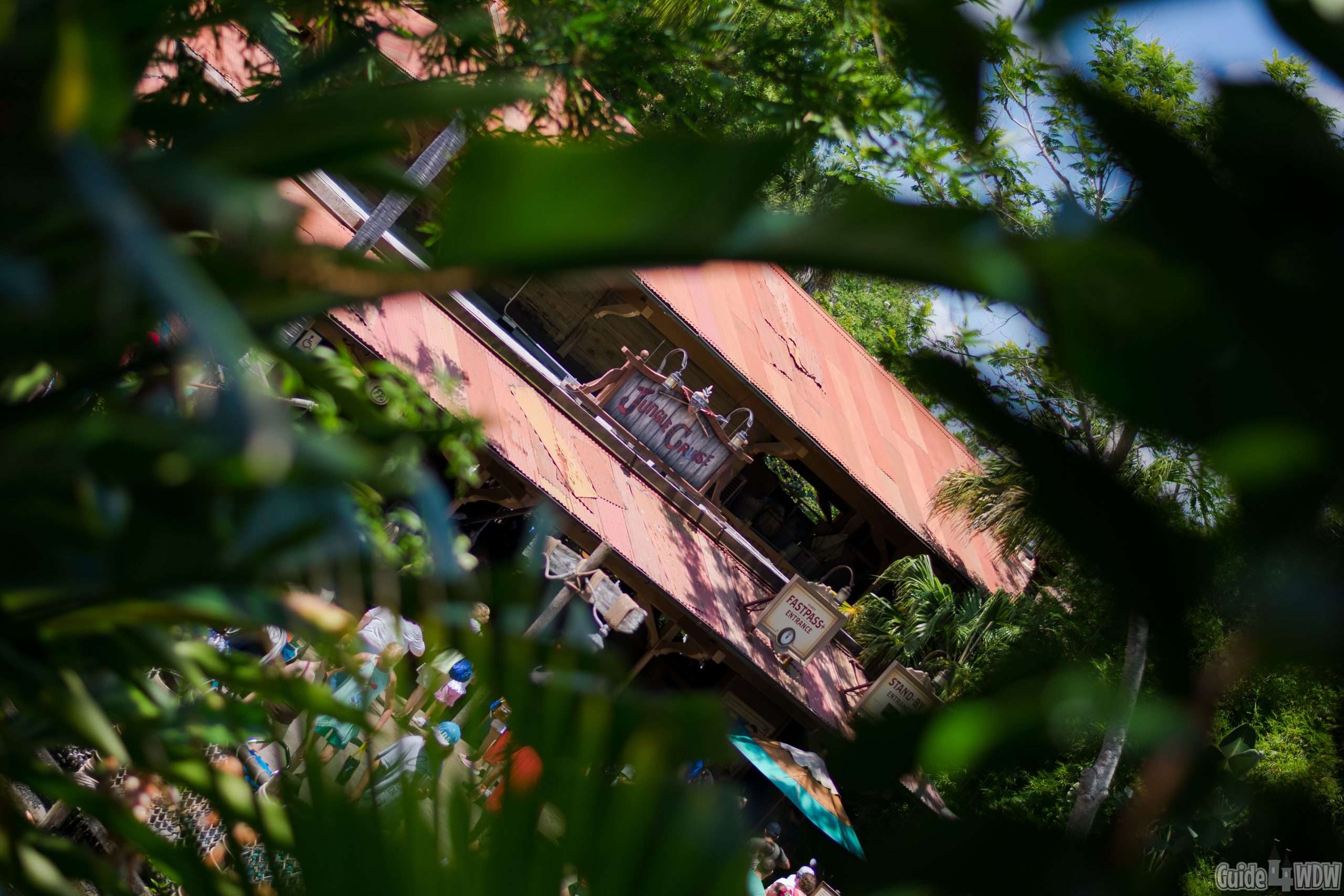
On paper, there isn’t much here. Disney filed for “General Construction” at 4851 Caribbean Way, with MLC Theming listed as the contractor. The address points us toward the area around the Adventureland popcorn cart, near Jungle Cruise and The Magic Carpets of Aladdin. The detail that makes this considerably harder to dismiss, however, is the timeline. Disney specifically listed an expiration date of August 31, 2028.
That’s an awfully long time to work on a popcorn cart. Unless Disney is preparing to unveil a popcorn experience with a preshow, trackless ride system and 14-minute finale, I suspect the address is far less interesting than the area surrounding it.
More importantly, I think we may be looking at this permit too narrowly. Rather than asking what Disney could possibly be doing to a popcorn cart for the next two years, the better question might be what Disney needs to do to this entire corner of Adventureland as Magic Kingdom prepares for its next era.
Months ago, on our former After Hours – Let’s Talk Disney livestream, we talked about something that I believe is going to become increasingly important as Disney builds the next version of Magic Kingdom. Disney can build all the new attractions it wants, but eventually it has to figure out where all of those people are going to go.
It isn’t nearly as exciting as concept art for a new attraction. Nobody is going to gather around Cinderella Castle while Disney triumphantly unveils a rendering of a 17-foot-wide sidewalk. There probably won’t be dramatic music as a new stroller parking area emerges from behind a curtain. But infrastructure matters, and it may be one of the biggest challenges facing the Walt Disney World of the next decade.
Magic Kingdom already has areas that struggle to comfortably handle the number of guests moving through them today. Now put a new flagship land on the horizon and imagine adding another major reason for thousands of people to move toward portions of the park that already have some very obvious pinch points.
Suddenly, sidewalks become a little more interesting.
The Contractor May Be One of Our Best Clues
The permit itself gives us very little to work with, but the company Disney hired is worth understanding.
MLC Theming isn’t simply a general contractor that happens to work around Walt Disney World. The company has specialized in themed construction for more than 40 years and works on both new construction and refurbishment projects. Its work includes themed plaster, scenic painting, façades and aging, along with the creation of artificial rockwork, brick, stone and other architectural details.
In other words, these are some of the people you call when you need brand-new concrete and plaster to look like it survived several hundred years in the jungle. That’s an oddly specific skill, but at Walt Disney World it’s apparently a pretty useful one. MLC also isn’t a new name around Disney property. The company has been attached to previous permits involving areas around attractions including Haunted Mansion, Space Mountain and Tower of Terror, along with other refurbishment and construction projects.
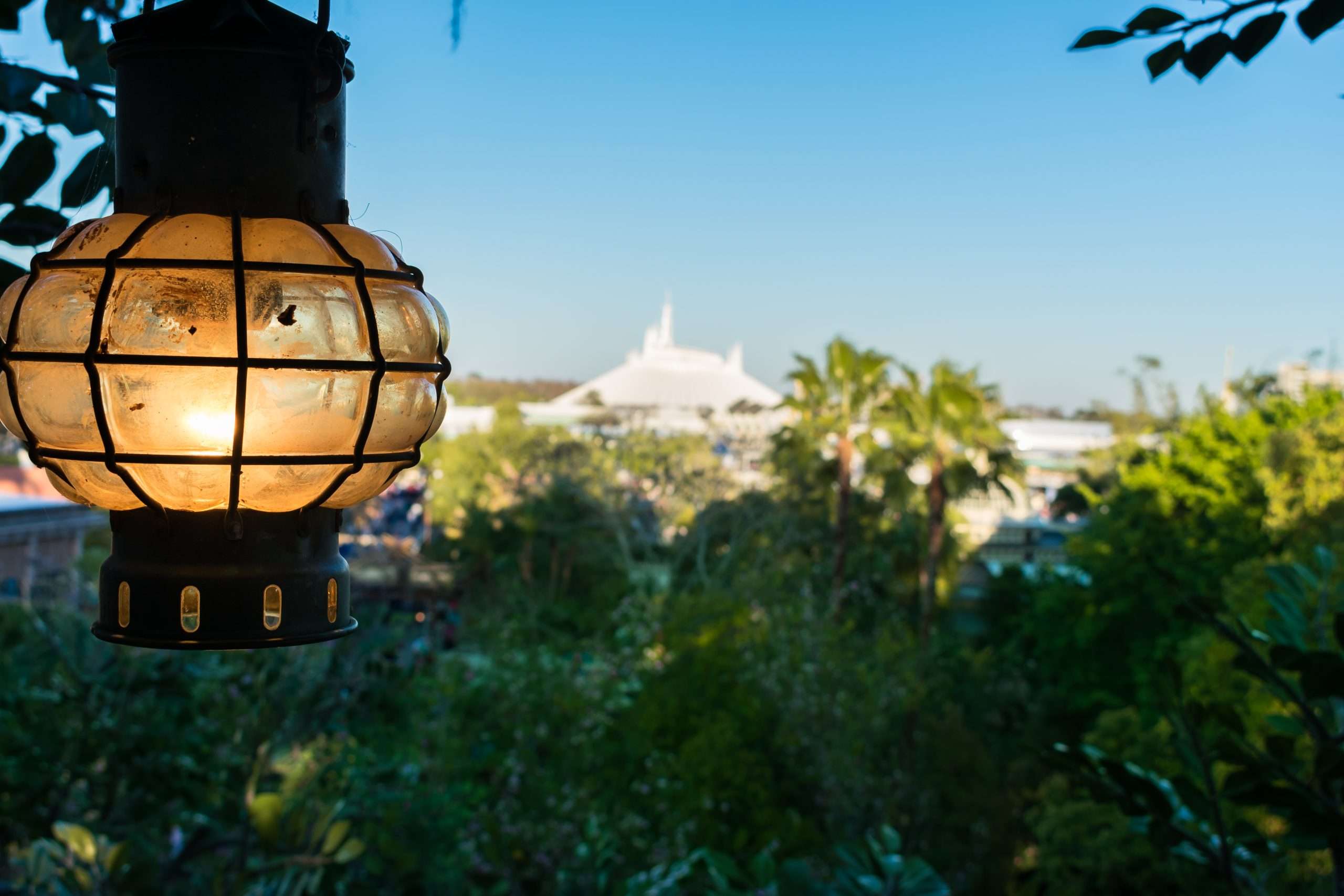
None of that tells us what Disney is doing in Adventureland. MLC’s involvement certainly isn’t evidence that a giant new rock formation is about to appear beside Jungle Cruise. But it does tell us something about the capabilities of the contractor Disney chose, and that becomes particularly interesting when you look at the physical environment surrounding this address.
Adventureland is full of exactly the sort of dimensional, textured environment MLC specializes in working with. There is rockwork, elevation, aging, façades and architecture woven together rather than simply a flat pathway with buildings sitting beside it. If Disney wanted to reconfigure some of this space while preserving—or rebuilding—the themed environment around it, a contractor capable of creating convincing rock, stone and aged architectural elements would make plenty of sense.
Again, none of that tells us what Disney is actually doing. But it gives us a much more interesting clue than the words “General Construction.”
Adventureland Has a Space Problem
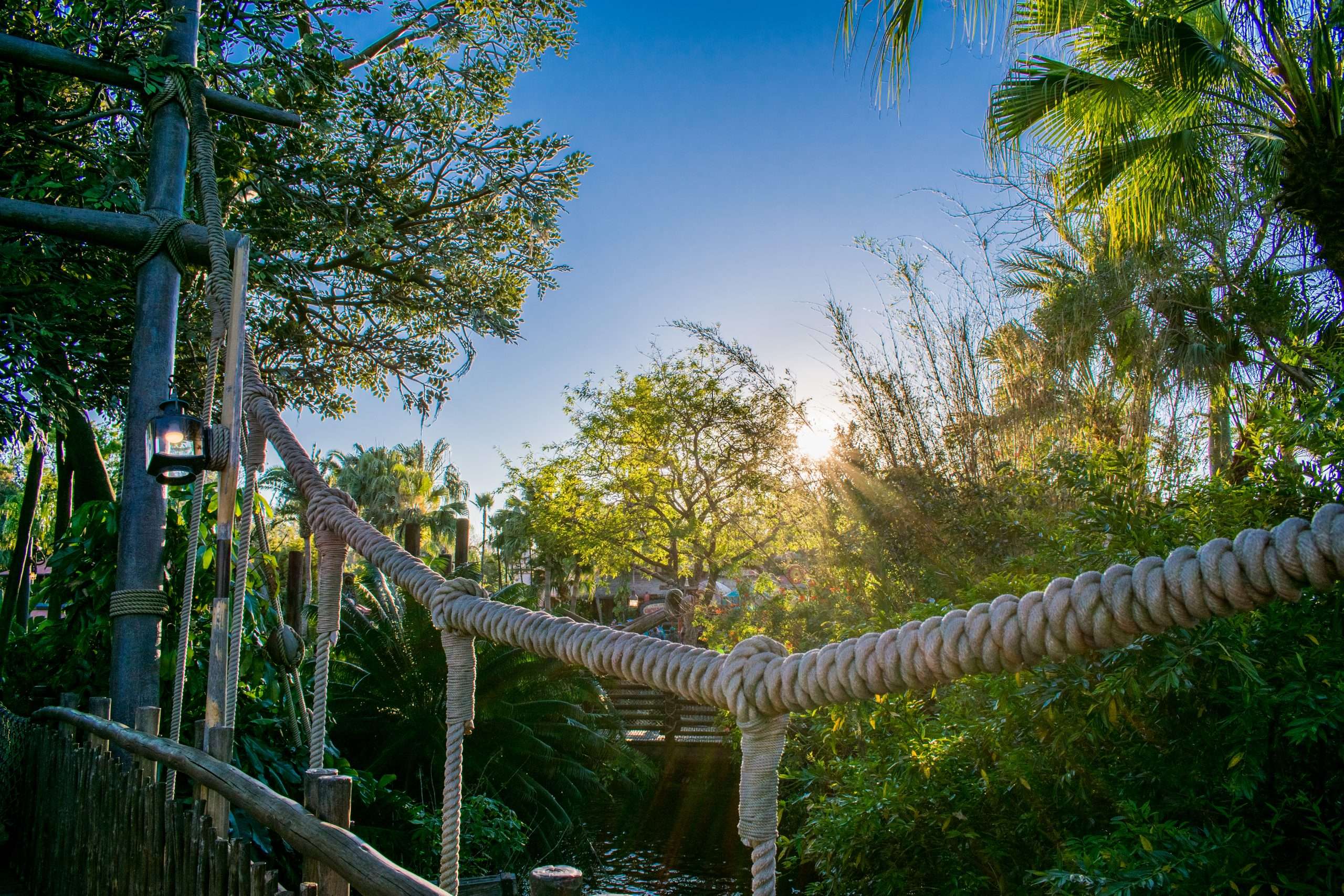
On a quiet morning, Adventureland is one of the most charming areas of Magic Kingdom. Jungle Cruise sits tucked behind layers of vegetation and architecture. The pathways bend and change elevation. Buildings overlap one another. The Enchanted Tiki Room almost blends into its surroundings (as it should). There are stairs, little passageways and details everywhere you look.
It’s messy in the best possible way.
Put several thousand people in that same space at the wrong time, however, and things get considerably less charming. The area surrounding Jungle Cruise and The Magic Carpets of Aladdin can become a bit of a mess. Guests are entering and exiting attractions, people are stopping to figure out where they’re going, Magic Carpets effectively occupies an island in the middle of the land, and food and merchandise locations add even more activity to a relatively small area. To the point where we all recall the swapping of menu items in this area among iconic snack stands.
Then there are the strollers. So many strollers.
There are moments in Adventureland when I’m reasonably certain Disney could sell Lightning Lane access just to get through stroller parking.
That’s one reason I’m particularly interested in the seemingly underutilized spaces surrounding the address attached to this permit. For years, the staircase and elevated area near Jungle Cruise has been one of those pieces of Magic Kingdom that doesn’t make a tremendous amount of practical sense anymore. It contributes quite a bit visually—and I actually like that it exists—but it also occupies potentially valuable space in an area where every few feet of pedestrian capacity can matter. If Disney were to open some of that area, reconfigure the staircase, rethink stroller parking or otherwise create more usable pedestrian space, it could dramatically change how many people this part of Adventureland can comfortably absorb.
To be very clear, the permit doesn’t tell us Disney is doing any of those things. That’s speculation on my part. But when I look at this area and think about what Magic Kingdom actually needs over the next several years, that possibility is considerably more interesting than anything Disney could conceivably be doing to the “popcorn cart” itself.
And this is where MLC’s involvement becomes particularly intriguing. If you’re going to remove, reshape or reconfigure portions of an environment like this without making the finished product look like someone simply poured a bigger concrete sidewalk through Adventureland, you’re probably going to need to rebuild some of the visual layers around it. Rockwork may move. Walls may change. Planters or façades could be rebuilt. Elevations could potentially be altered.
We don’t know that any of those things are happening. But they’re the kinds of changes a company like MLC is equipped to make look as though they had always been there.
The Timeline Still Doesn’t Look Like a Popcorn Cart
The timeline is what keeps bringing me back to the idea that the address is probably more useful as a geographical marker than a description of the project.
Disney didn’t file a permit that says “Adventureland crowd-flow improvements.” It says “General Construction,” which is about as descriptive as writing “Disney stuff” on the paperwork. But Disney also gave itself a construction window stretching all the way to August 31, 2028.
That doesn’t mean construction will actually take two years. It doesn’t tell us when work will begin, exactly what will be touched or how substantial the finished project will be. It simply gives Disney a very long window for whatever this particular project ultimately encompasses.
Still, if this really is just a popcorn cart, I have questions. At some point, if the popcorn needs two years, a specialty theming contractor and a construction permit extending into 2028, we may need to stop calling it a snack stand and start calling it Adventureland’s next E-ticket. I’m mostly kidding.
The more mundane explanation is probably that Disney used the closest appropriate address for work somewhere in this immediate area. Exactly how much of the surrounding area is involved remains unknown.
There is also the nearby Enchanted Tiki Room to consider, although this is where we need to be especially careful not to connect dots that may not actually connect. There has been permitting activity associated with the Tiki Room as well, but the much shorter timeline could point toward an entirely separate and relatively routine project. There is currently no reason to say the two projects are connected.

Still, forget about the permits for a moment and physically look at Adventureland. If Disney were going to significantly increase pedestrian capacity on one side of this pathway, it would make sense to at least consider what happens on the opposite side. Otherwise, you’ve spent a bunch of money solving one bottleneck only to move the bottleneck six feet to the left, which would be an impressive amount of engineering to ultimately arrive at the same problem.
Maybe the Real Project Is Magic Kingdom Itself
Whenever a Disney permit appears, the natural reaction is to figure out what thing Disney might be building. Is it a restaurant? A merchandise location? A remodeled snack stand? Is there somehow a new attraction hiding behind those wonderfully vague words “General Construction”? In this case, however, I wonder if the more important story over the next several years isn’t about another thing at all. It may simply be about space.
Magic Kingdom is changing. Disney is investing heavily in expanding a park that opened in 1971, and a new flagship land doesn’t exist in isolation. Guests have to get to it. They have to leave it. They have to eat somewhere, park their strollers somewhere, use restrooms somewhere and eventually funnel back toward the front of the park.
That’s the part of Magic Kingdom’s expansion that we really haven’t seen much of yet.
The attractions get the concept art because they’re the reason people book trips. Nobody books a week at the Grand Floridian because Disney increased pedestrian throughput near Adventureland by 14 percent. But that doesn’t make the latter unimportant. In some ways, it may be the bigger challenge.
Magic Kingdom can already feel extraordinarily crowded without adding another major destination. There are pinch points throughout the park where it can go from busy to uncomfortable remarkably quickly. That’s happening with the Magic Kingdom we have today.
Now imagine adding another flagship land… or two. That’s what makes the next few years so interesting. Disney isn’t simply building something new. It’s attaching something new to an existing park that has to absorb all of the people the new thing attracts.
If this Adventureland project does ultimately involve pedestrian flow, stroller parking or opening currently underutilized space, perhaps it’s an early indication that Disney is starting to address the less glamorous side of the expansion too.
I hope it is.

The Problem Doesn’t Stop at the Park Gates
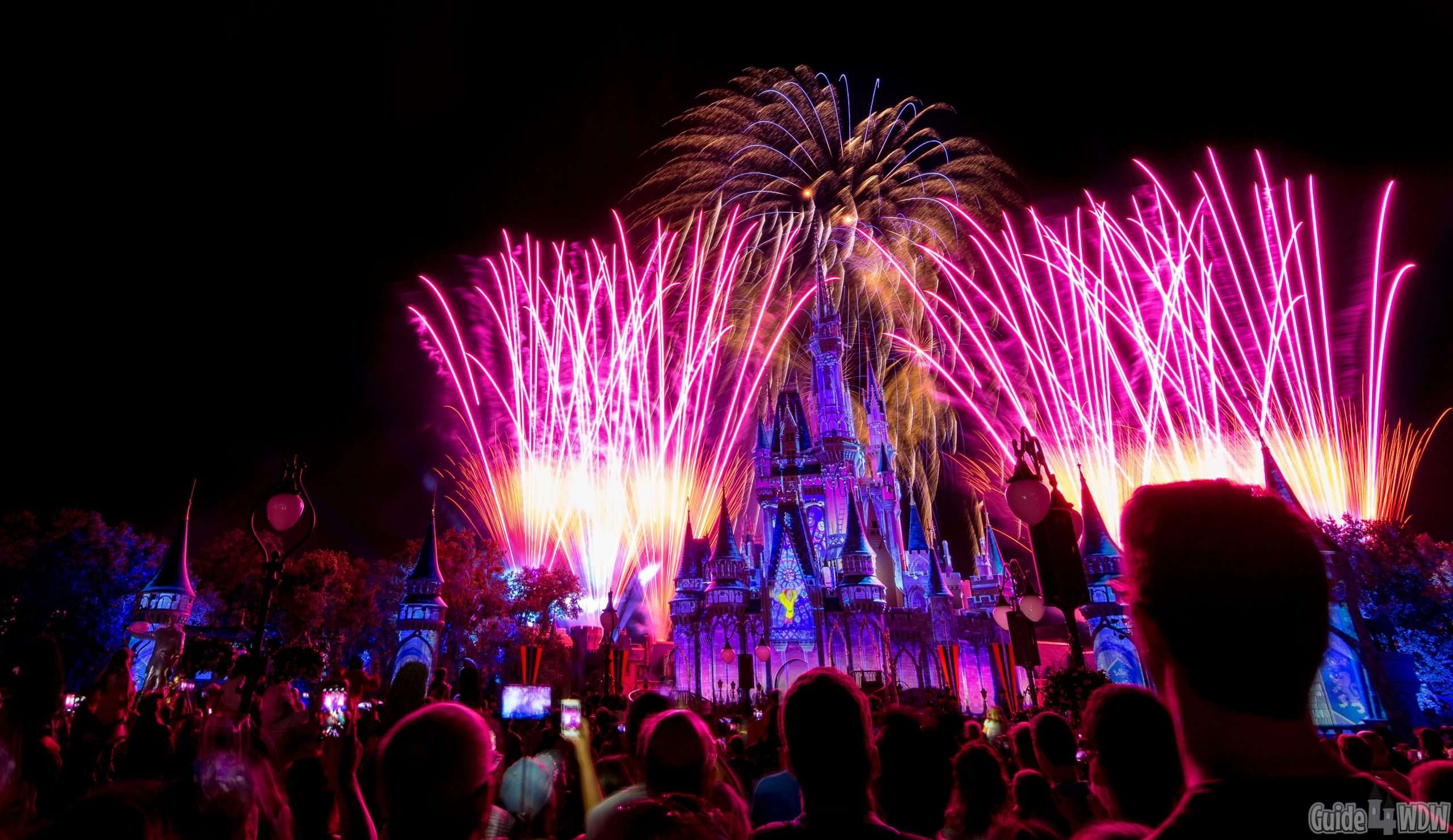
You can see the same basic challenge on a much larger scale every night after the fireworks. There’s a wonderful moment at the end of Happily Ever After when the music swells, Cinderella Castle is glowing and thousands of people have just watched a show about dreams, love and finding your place in the world.
Then approximately half of those people simultaneously decide their place in the world is on the next monorail. The transformation is remarkable. Main Street becomes a river of humanity flowing toward the exit. Families attempt to stay together, strollers appear from every conceivable direction and inevitably someone decides the exact middle of the walkway is the ideal location to stop and discuss tomorrow’s Lightning Lane strategy.
Then many of those guests reach the front of Magic Kingdom only to remember they’re still not actually where they need to be.
That’s one of the peculiarities—and charms—of Magic Kingdom. The Transportation and Ticket Center sits across Seven Seas Lagoon. Guests heading toward the parking lots may still have a monorail or ferry trip ahead of them, while resort guests are simultaneously heading toward buses, boats, the Resort Monorail or nearby walking paths.
Most of the time the system works remarkably well considering the sheer number of people Disney moves around this property every day. But post-fireworks Magic Kingdom demonstrates the larger infrastructure challenge better than almost anything else.
Disney doesn’t necessarily have a crowd problem because too many people are visiting. It has a crowd-management problem whenever enormous numbers of those people want to occupy the same place—or move in the same direction—at the same time.
That’s a different problem, and it requires different solutions.
Building the Next Walt Disney World “Experience”
That’s why I hope infrastructure becomes a much more visible part of Disney’s investment over the next decade. Walt Disney World is preparing to add some enormous new reasons to visit, but we haven’t yet seen the same level of attention paid to how all of those additional people will move through the existing parks and around the resort.
That’s not necessarily a criticism. Many of these projects are still years away, and there is plenty of time for Disney to make those changes. But it does leave us with an interesting question: What happens when an already crowded Magic Kingdom gets new flagship lands?
It’s easy to look at concept art and think about the capacity of the new attractions themselves. The bigger picture is considerably more complicated. Those guests still have to get to the new land. They have to pass through existing areas of the park. They need restaurants, restrooms and stroller parking. At the end of the night, a significant number of them are eventually going to head toward the same park exit.
That’s why something as seemingly insignificant as opening an underused staircase area, reorganizing stroller parking or adding a few feet of usable pathway could matter more than it initially appears. None of those changes would make the cover of a Disney vacation brochure (It’s a shame those don’t exist). Collectively, however, infrastructure improvements like these could have an enormous impact on how the park actually feels when you’re standing in it.
And I’d like to see that thinking extend beyond Adventureland. Better pedestrian flow, additional transportation capacity where it’s needed, smarter crowd distribution and improvements to the little bottlenecks scattered around Walt Disney World may not generate the excitement of a new attraction, but they help protect something that’s equally important: the ability to actually enjoy moving around the place.
One of my favorite things about Walt Disney World is how much there is to explore beyond whichever park you happen to be visiting that day. You can leave Magic Kingdom and stop at the Polynesian, wander through the Grand Floridian at Christmas, take a boat somewhere simply because you can, or finish an EPCOT evening walking around the BoardWalk. The transportation network and the freedom to move around the property are part of the experience, not merely a means of getting from one attraction to another.
As Walt Disney World grows, I’d love to see Disney lean even further into that idea. Don’t just build more destinations. Make it easier and more pleasant to move between them.
Maybe that means transportation improvements. Maybe it means better pedestrian connections where they make sense. It could mean rethinking loading areas, park exits or how crowds disperse after nighttime spectaculars. Inside the parks, it could be something as simple as identifying places where an old design no longer works particularly well for modern attendance and finding a way to give people a little more room.
I certainly don’t have the engineering plan. Some nights I can’t successfully move four people from Pirates of the Caribbean to a dinner reservation without somebody disappearing into a gift shop. But the principle seems fairly straightforward. If you’re going to give more people more reasons to come, eventually you need to give all of those people somewhere to go.
And that brings us right back to Adventureland.
Adventureland Is Charming Partly Because It’s Inefficient
If Disney can make this particular area of Adventureland easier to navigate, it probably should. More breathing room would be welcome. Better-organized stroller parking would be very welcome. Finding a practical use for currently underutilized areas could be a significant improvement.
At the same time, I hope Disney is careful, because one of the things I love about Adventureland is that it isn’t a giant open plaza.
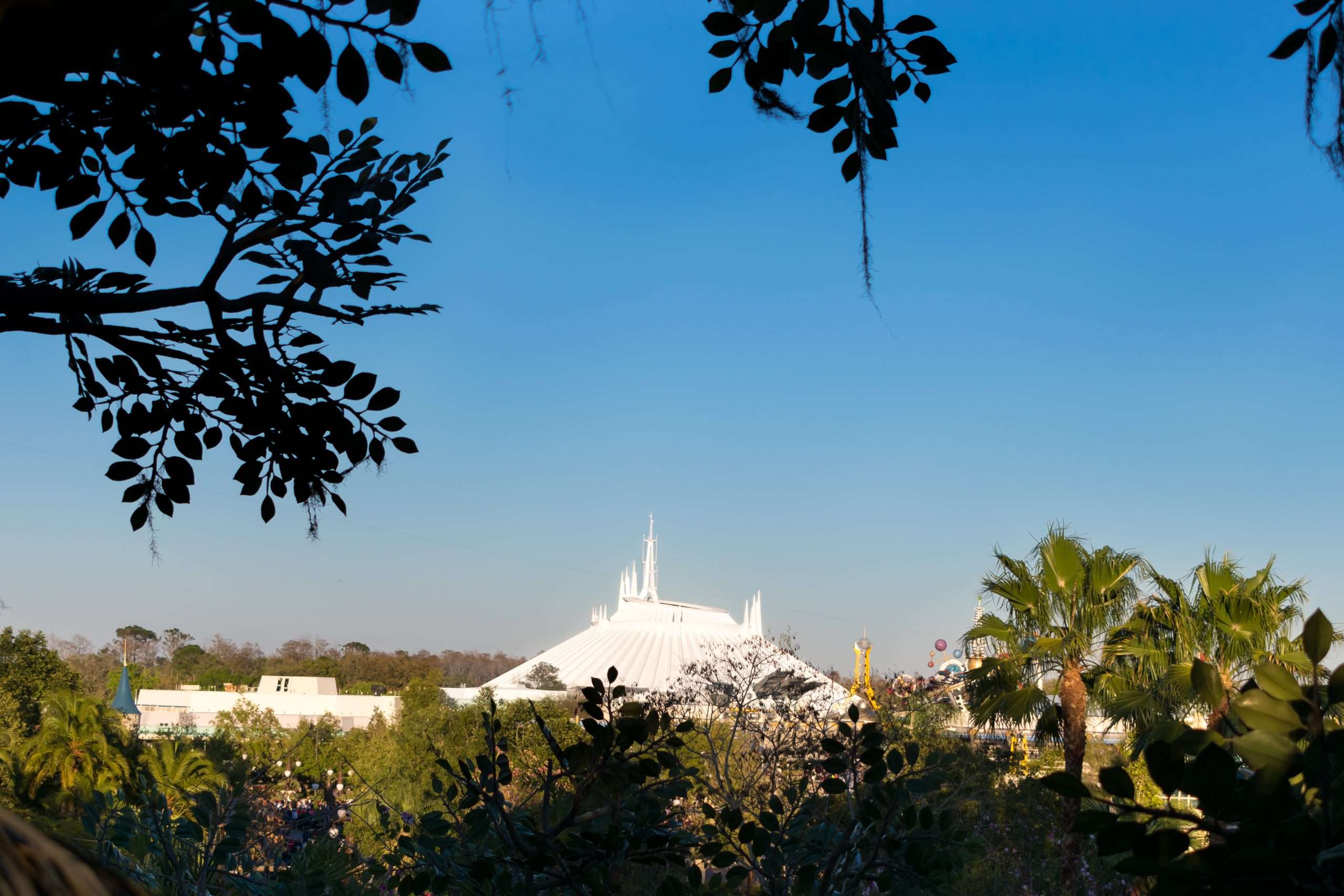
There’s a layered quality to this part of Magic Kingdom that newer theme park environments sometimes struggle to recreate. You see buildings behind buildings. Staircases lead your eye somewhere even when you’re not entirely sure where they go. Vegetation breaks up sightlines. Attractions aren’t presented like items lined neatly along the aisle of a grocery store.
You discover things.
Some of Adventureland’s inefficiency is part of what gives it character and part of what makes me nervous. The easiest way to accommodate more people would presumably be to remove obstacles, simplify circulation and make pathways wider. It might also be the easiest way to make Adventureland a little less interesting.
That’s the tension Disney is going to face throughout the resort as it grows: How do you make a place built for yesterday’s crowds work for tomorrow’s crowds without sanding away all the weird little things that made the place worth visiting?
Adventureland needs room to breathe. I just hope Disney doesn’t give it so much room that it loses some of what makes the land special in the first place.
Ultimately, that’s why this otherwise rather boring permit has my attention. Maybe we’re dramatically overthinking it. Maybe August 2028 rolls around and Disney really has created the finest popcorn cart mankind has ever known.
If so, I’ll gladly buy a themed bucket and admit defeat.
But I don’t think the popcorn cart is the interesting part of this story.
The interesting part is that Disney is preparing to fundamentally change Magic Kingdom while portions of the existing park—and the infrastructure surrounding it—already struggle when everyone wants to occupy the same space or go in the same direction at the same time.
We’ve talked about this problem before. At some point Disney was going to have to start thinking not only about what it adds to Magic Kingdom, but how Magic Kingdom itself functions once those additions arrive. This isn’t the first time we’ve seen this either. Who else remembers the old Hub?
This Adventureland project could be completely isolated. It could turn out to be something relatively mundane. Or it could represent one small piece of a much larger effort to prepare the existing park for what’s coming. The permit doesn’t give us enough information to know that yet.
Still, if pathways start changing, stroller parking starts moving and some of those strangely underutilized corners of Adventureland suddenly become construction zones, I won’t be particularly surprised. In many ways, those kinds of improvements are probably overdue.
And if Disney really is beginning to think more seriously about infrastructure, I hope the thinking doesn’t stop at Adventureland—or even at the park gates. Build the attractions. Build the lands. Give us new reasons to come back and make new memories. But also build a Walt Disney World capable of comfortably moving all the people those new experiences are supposed to attract.
Just don’t bulldoze every weird staircase in the process.
Sometimes the inefficient little corners are the places that make Disney World feel like Disney World.

Discover more from Guide4WDW.com
Subscribe to get the latest posts sent to your email.