

All Photos: Disney Parks Blog
There are very few places in life where a grown adult can look at a scale model of a theme park, stare at it for an uncomfortable amount of time, and become genuinely concerned about where people are going to stand. Yet here we are.
I caught myself doing exactly that while looking at the model for Piston Peak. Not the attractions. Not the mountains. Not even the fact that Disney is building an enormous Cars-themed environment in the middle of Magic Kingdom. I was looking at the pathways thinking, Where are all these people going to go?
This is apparently what nearly 30 years of visiting Disney World does to a person. And, strangely enough, I kind of love it.
D23 has always brought out this side of Disney fans. Disney puts a piece of concept art on a screen for approximately nine seconds and, before the applause has stopped, someone online has already identified the exact trash can visible in the bottom-left corner. We’re a strange group of people, but there’s something genuinely fun about it.
For a few hours, Disney pulls back the curtain just enough for us to see what might be coming next. We get models, artwork, attraction names, Imagineers talking about things they’ve been quietly working on for years, and occasionally Neil Patrick Harris standing next to Dreamfinder for reasons none of us completely understand yet.
Then they send us home with half the answers we’d like to have.
This year’s presentation might be the perfect example. I went into it admittedly skeptical. That’s partly because the last several years have taught me to separate announced from built. We’ve seen projects change, shrink, evolve and occasionally disappear altogether. In fact, my expectations were apparently low enough that I completely forgot the stream had started and missed the first half. A decade ago, that sentence would have been grounds for having my Disney-site owner credentials revoked.
But when I went back and watched everything, I found myself doing something I hadn’t expected. I was having fun with it. Not because every announcement blew me away. Some didn’t. A few left me with more questions than answers. But there is a lot here worth talking about.
So rather than regurgitating everything Disney announced—you can find plenty of places that will do that far better than I will—I want to talk about the things that stuck with me. And apparently we’re starting with crowd flow.
I warned you I’ve been doing this too long.

Piston Peak — Beautiful, Complicated, and Fascinating
Let’s deal with the elephant in the room. Tom Sawyer Island has gone away.
I’ve never been the world’s biggest Tom Sawyer Island fan, but I’ve always appreciated what the island and Rivers of America did for Magic Kingdom. They gave it depth. There was water between you and whatever was on the other side. Trees interrupted your view. Liberty Square and Frontierland had room to breathe.
Sometimes the most important part of a themed environment isn’t another thing to do. It’s the empty space between the things.
That’s what makes Piston Peak fascinating to me, because taken entirely on its own, I think it looks fantastic. Cars Ridge Run Rally and Miss Fritter’s Daredevil Spin-Along should be heavily themed attractions, and Disney’s description of a National Park-inspired environment immediately makes me think of Grizzly Peak at Disney California Adventure. If that’s remotely where they’re headed aesthetically, sign me up.
The model is beautiful. My questions begin when I mentally drop that model into Magic Kingdom. You’re going from Liberty Square into a National Park-inspired Cars environment, alongside Haunted Mansion, toward Frontierland and the bayou, and eventually somewhere back there we’re supposed to find an entire land dedicated to Disney Villains.
That’s quite a sentence.

It also reinforces something I’ve been noticing about Disney’s modern park design. The idea of a “land” seems to be changing. Historically, places like Adventureland and Frontierland were broad environments. Individual attractions existed inside the idea. Increasingly, Disney seems comfortable building smaller worlds beside one another, with relatively short transitions between them.
Disney California Adventure operates this way extensively. Hollywood Studios increasingly does too. Neither approach is inherently better, but they feel different.
Animal Kingdom remains perhaps Disney’s best example of making separate environments feel like pieces of the same larger world. You can move between them without constantly feeling like you’ve walked through an invisible door into another franchise. That’s what I’m curious to see Disney accomplish here. Then there’s my completely normal concern about where several thousand people are going to stand.
Look at how much real estate the attraction occupies in the model. Then think about the popularity of Radiator Springs Racers in California. Add Haunted Mansion’s queue nearby. Eventually add Villains Land.
Opening morning should be entertaining.
Disney has undoubtedly considered this. There may be some queue sorcery hidden inside those mountains that we simply can’t see yet. I hope so, because operational questions aside, there are details here I genuinely love—particularly the reintroduction of water around the edge of the land.
If Disney can use that water, landscaping and elevation to gradually transition toward Big Thunder Mountain, the finished environment may feel considerably more natural than it does when we’re staring at a model from above.
That’s the limitation of all of this anyway. We’re trying to judge a place before it exists.

Villains Land and the Art of Telling Us Almost Nothing
Then there’s Villains Land. Two years after Disney first started talking about this project, I expected we’d know considerably more about it.
We don’t.
There are attraction ideas. There’s a coaster. There’s apparently a water-based attraction. Cruella may be involved somewhere. We’ve seen some concepts and a very early model. And that’s roughly where we are.
My reaction isn’t really negative. It’s more: Okay… keep going.

How do we get there? What’s the transition from Piston Peak? What’s the architectural identity? What makes this feel like a place rather than a collection of villain-themed attractions? Beyond a conceptual villainous wishing well and some really really early coaster models. Disney may have great answers. I just don’t know them yet.
And perhaps that’s intentional. After announcing ambitious projects in previous years that later changed or disappeared, Disney seems considerably more careful about promising specifics before they’re ready. That’s probably smart. It’s just considerably less satisfying when you’re sitting in the audience waiting for the next slide. Or I imagine so, I saw it on a stream in my living room lol.
Dreamfinder Walks Onto a Stage and Breaks the Internet
Then came one of my favorite moments of the night: Dreamfinder.
If you’ve followed EPCOT for any length of time, you know Journey Into Imagination rumors are essentially a Disney-fan tradition at this point. Every few years, somebody hears something. Figment is changing. Figment is leaving. Dreamfinder is returning. The pavilion is being rebuilt. The original attraction is being reconstructed brick-for-brick using materials recovered from Horizons.
Okay, I made that last one up.
Probably.
So when Dreamfinder appeared alongside Figment, you could almost feel everyone collectively leaning forward.
Here we go.
Disney told us we’re taking a new journey into imagination with Dreamfinder and Figment. And then… that was about it. I couldn’t help but laugh. It was simultaneously a wonderful surprise and perhaps the most effective way imaginable to generate 48 hours of rampant online speculation. I’m excited. I just have absolutely no idea what I’m excited about.
The wording could mean a substantial attraction reworking. It could mean new scenes. It could mean a much smaller update. It could even involve a character experience. Until Disney tells us, all we’re doing is shaking the box and guessing what’s inside. But I will say this: seeing Dreamfinder holding Figment again was cool.
Sometimes that’s enough for the moment. Just give me a little more.
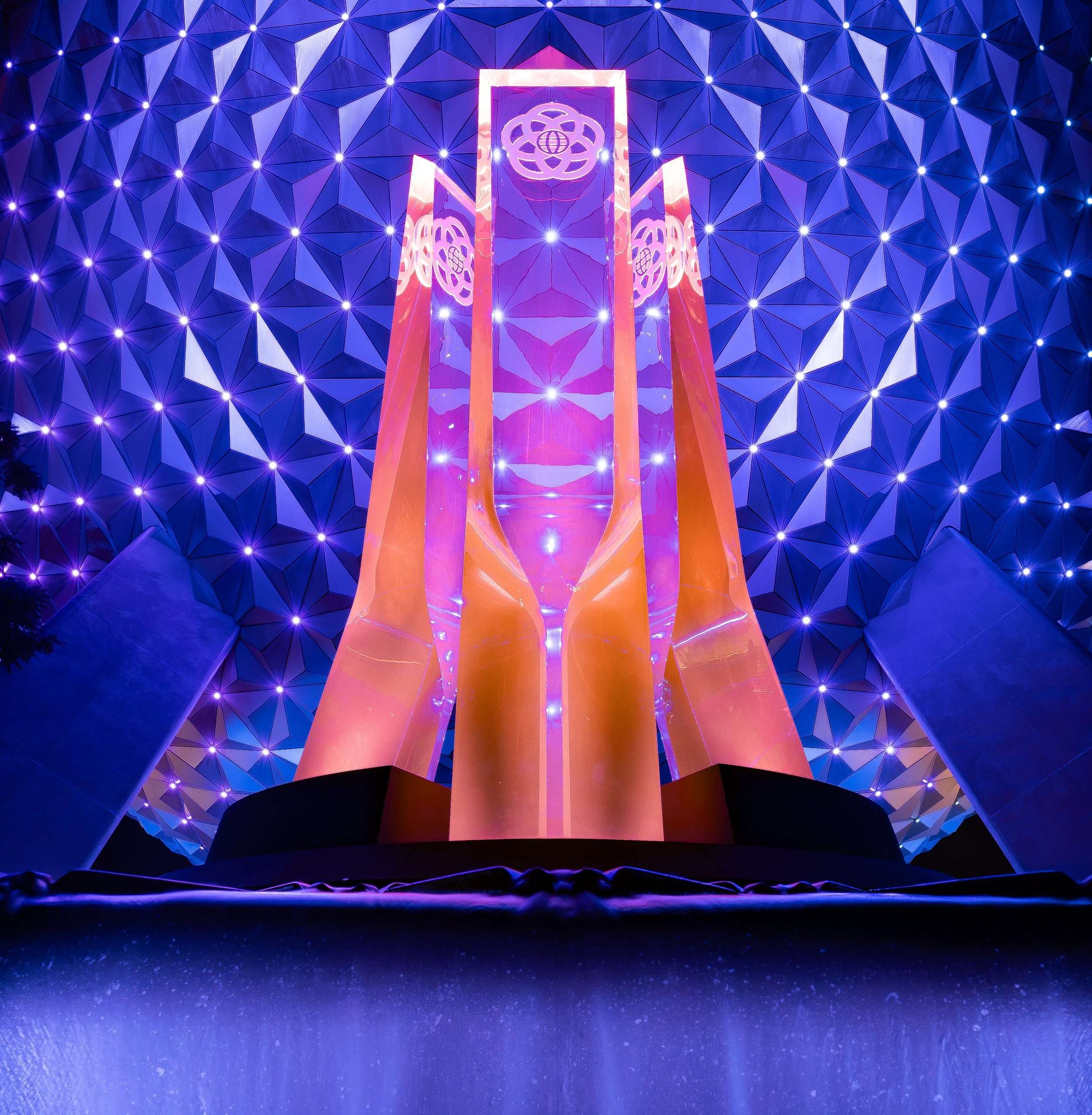
This photo is actually mine.
Spaceship Earth Is Headed for the Future — Whatever That Means
Speaking of EPCOT announcements that leave us with considerably more questions than answers, Spaceship Earth is getting reimagined too.
Disney’s description is intriguing. The attraction has spent decades telling the story of human communication, but this next version will apparently broaden that idea around human connection, carrying Spaceship Earth through the internet age and into whatever Disney thinks comes next. I actually like that premise quite a bit.
Communication and connection aren’t exactly strangers to one another, and if there’s any attraction where Disney can explore how humanity has changed without completely abandoning what made the original work, Spaceship Earth is probably it. The problem is that’s about all we know.
What does “human connection” actually mean once you’re sitting inside the ride vehicle? Are existing scenes staying? Are we getting substantial new ones? Does the internet age finally get something more elaborate than staring at a kid talking to another kid on a computer? Is the descent finally getting the attention it has needed for years?
Once again, Disney essentially handed us a very interesting sentence and wished us luck.
There’s also something inherently funny about trying to update an attraction about the history of human progress. Whatever version Disney builds will eventually become history itself. That’s always been the wonderfully impossible problem with EPCOT: the future has a terrible habit of arriving.
Still, this one has my attention. Spaceship Earth is one of those attractions where I don’t necessarily want Disney to reinvent the wheel—or, in this case, the giant geodesic sphere. I want them to understand why it has endured and then thoughtfully carry that idea forward.
Human connection could be a way to do that. I just need Disney to connect me with a few more details first.
Tomorrowland Gets Another Tomorrow
Disneyland’s Tomorrowland received an equally interesting—and equally vague—mention. It’s one of the most fascinating parts of Disneyland because Tomorrowland has struggled with the problem built directly into its name.
Tomorrow eventually becomes today.
From the PeopleMover to Rocket Rods and the remnants of attractions and ideas that came and went, Tomorrowland has spent decades trying to decide what its future should look like. Disney says another rethink is coming.
Great.
What is it? Well… we’ll get back to you on that.
Again, I understand the caution. We’ve watched announced Disney projects disappear before. The Play! Pavilion, Mary Poppins and portions of EPCOT’s larger transformation are obvious examples. Perhaps Disney has learned not to show us the finished cake when they’ve only bought the flour. That’s probably a healthier approach. Much to our dismay. Or, follow through.
It just means I’m putting this one firmly in the category of: That sounds interesting. Call me when you’ve got blueprints.

Monstropolis Feels Different
Monstropolis is where this presentation started feeling much more tangible because this one is happening. Having been near the construction only a few weeks ago, I can tell you those construction walls aren’t hiding much anymore. The space is changing quickly.
And that’s excellent news for Hollywood Studios. That park needs more places for people to go, and getting Monstropolis open—even if every component isn’t finished simultaneously—could help enormously. The coaster obviously gets most of the attention, and the mechanism Disney demonstrated for lifting guests from the scare floor looks fantastic.
But do you know what got me?
Harryhausen’s.
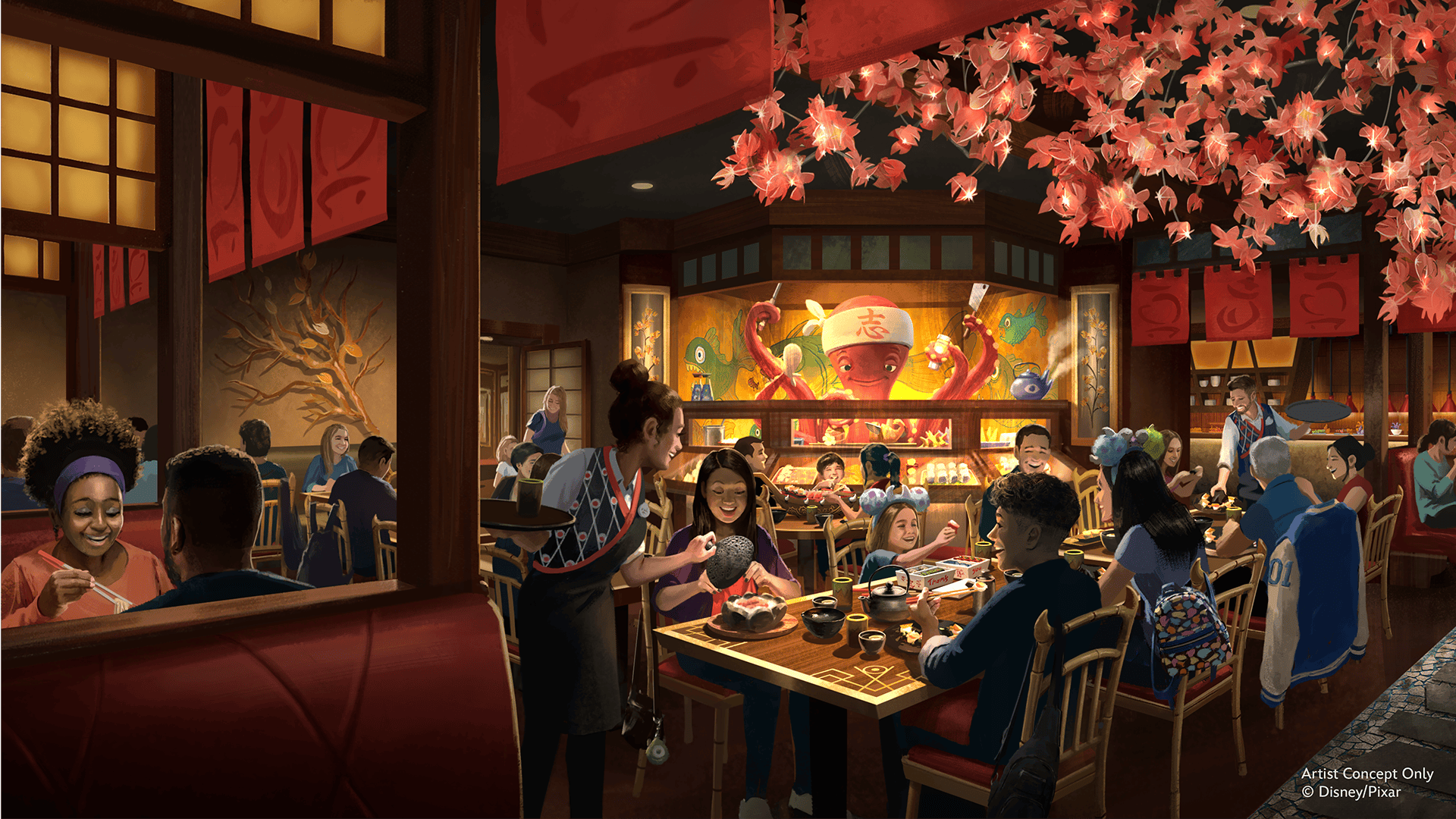
I’ve wanted Disney to build that restaurant for years. I don’t even eat sushi. Yet show me an animatronic sitting inside a fictional sushi restaurant from Monsters, Inc. and suddenly I’m completely invested. That’s the Disney stuff I love.
It’s not necessarily about building the biggest attraction imaginable. It’s taking some ridiculous little detail from a movie and saying: What if you could actually go there? Those details are what turn a collection of attractions into a place. And they’re why Monstropolis has my attention.
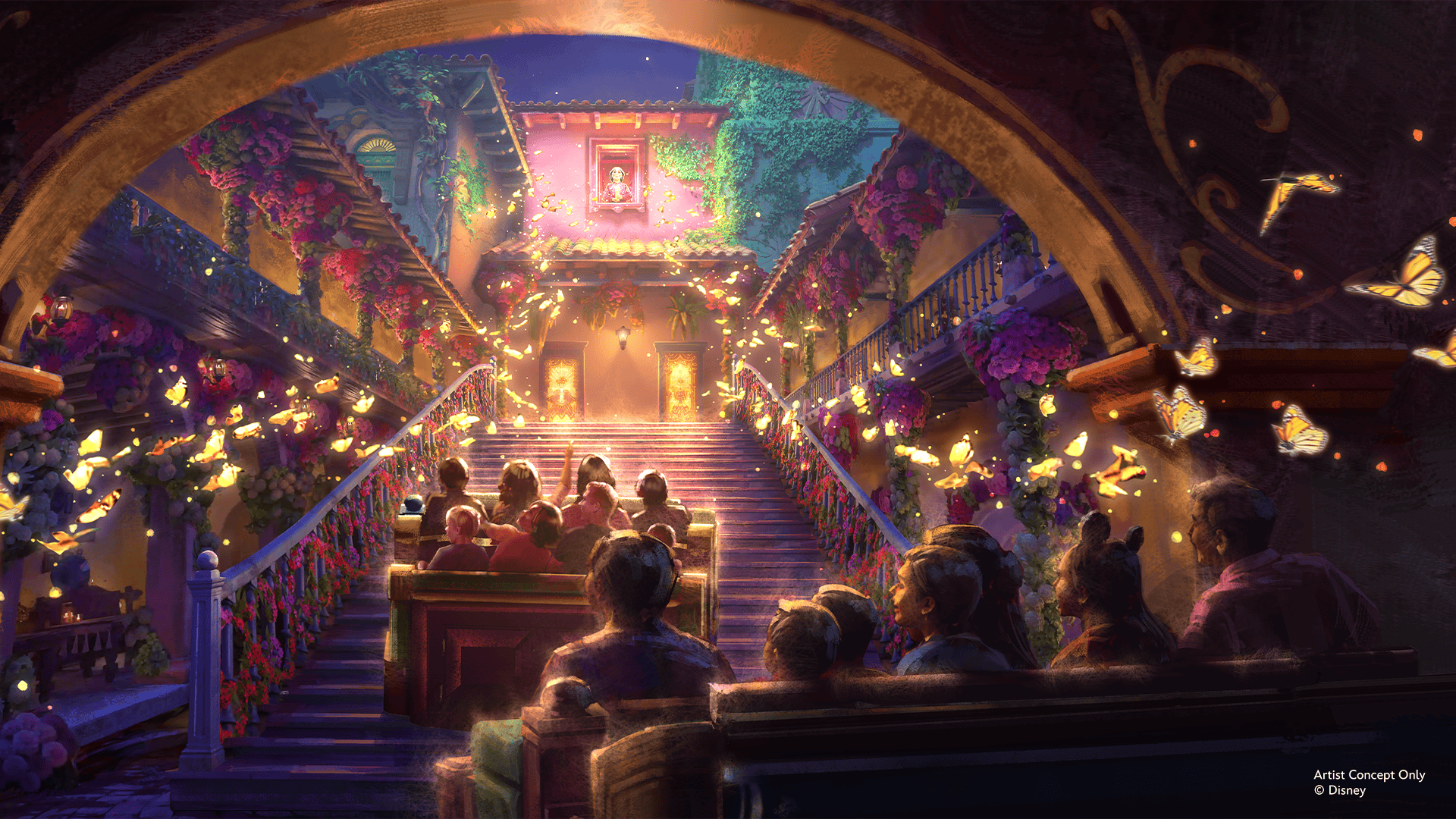
Animal Kingdom Understands the Assignment
Then there’s Animal Kingdom. Of everything Disney showed, this might be the project I’m most comfortable simply being excited about.
The Tropical Americas area looks great. The Encanto attraction’s ride system appears genuinely interesting, and the reworked Dinosaur attraction—now Indiana Jones and the Myth of the Jade Serpent—has enormous potential. Harrison Ford getting an animatronic is also objectively pretty cool.
But once again, one of the smallest details caught my attention.
Disney talked about the animals represented on El Carrusel de los Animalitos. That’s important. Not because I’m particularly invested in carousel animals, but because it suggests Disney understands what park they’re building this land inside.
Animal Kingdom has always been remarkably cohesive when it’s at its best. The architecture, vegetation, animals, music and attractions all support a larger idea. It’s not simply a place where Disney puts things.

It has a point of view.
If Tropical Americas can incorporate Encanto and Indiana Jones without losing that, I think Disney may have something special here. It’s the opposite of some of my hesitation surrounding Piston Peak. This already feels like it belongs. And sometimes that’s the highest compliment I can give a new Disney project.
And Then There’s the Yeti
Perhaps the most surprising Animal Kingdom announcement had nothing to do with something new at all. Disney says the Yeti inside Expedition Everest is finally coming back to life. Yes. That Yeti. After nearly two decades of the lovingly—or perhaps desperately—nicknamed “Disco Yeti,” Disney says the massive figure inside the Forbidden Mountain is going to move again.
That’s a pretty big deal.
Expedition Everest was one of Joe Rohde’s babies. Really, Animal Kingdom itself was. Rohde spent years talking about the Yeti after it stopped operating as intended, at one point famously promising that he’d fix it someday. Even after retiring, he explained that the problem wasn’t necessarily the absence of a solution. There were solutions. Getting engineering, operations, finance, timing and everything else aligned to actually implement one was the difficult part.
Which is why something about this announcement caught my attention.
Joe Rohde was at D23. And he didn’t announce it.
Maybe that means absolutely nothing. Rohde is retired, after all, and perhaps Disney was simply being respectful of that, or vice versa. Maybe he didn’t want the moment. Maybe the current Imagineering team deserves to own the solution they’ve developed. All completely reasonable explanations.
But my Disney-fan brain can’t help going one step further.
If you’re finally announcing that you’re fixing the Yeti—the Yeti Joe Rohde helped create, spent years discussing and once publicly promised to fix—and the man himself happens to be in the building, wouldn’t you want to give him that moment? I would.

Unless, perhaps, what Disney means by “bringing the Yeti back to life” isn’t quite the restoration we’re all picturing. And to be very clear, that’s entirely speculation on my part. Disney hasn’t explained what the fix actually entails. We don’t know whether the original figure will return to something resembling its original full-motion A-Mode, whether Imagineering has developed a different movement profile, or whether we’re getting some other solution entirely.
That’s what makes Rohde’s absence from the announcement interesting to me. Maybe the Yeti is about to swipe at trains again exactly as it did when Expedition Everest opened. I hope so.
But until Disney tells us what “back to life” actually means, I’m going to leave a tiny bit of room for the possibility that the end of Disco Yeti doesn’t necessarily mean the return of the Yeti exactly as we remember it. And perhaps I’m reading entirely too much into who walked onto a stage at a Disney convention. That would certainly be on brand. Either way, I love that Disney is going back to it.
There’s no new franchise involved. No new land. No intellectual property being inserted into an existing attraction. They’re simply looking at something that was already extraordinary and apparently saying, We can make this work again.
In an event overwhelmingly focused on what’s coming next, there was something refreshing about that. Sometimes progress isn’t building the next thing. Sometimes it’s caring enough to finish what you started.
The Best Part Is Not Knowing Yet… Sort Of
I finished watching D23 feeling two things at once: excited and confused.
There are projects here that look fantastic. There are others where Disney essentially told us, “We’re doing something,” and then moved on before telling us what that something is.
A few years ago, that probably would have frustrated me considerably more. Now, I think I’ve started to appreciate the uncertainty a little bit.
Because this strange period between announcement and opening is part of being a theme park fan too. We look at models. We stare at concept art. We wonder how the queue is going to work. We debate whether something belongs in Frontierland as if we’re personally responsible for approving the construction permit. We get some predictions right. We get plenty wrong.
Then eventually the walls come down and we get to walk into the real thing. And the real thing is almost never exactly what we pictured. Or they pictured… clearly. That’s what makes all of this fun. Twenty years from now, I doubt I’ll remember the exact night Disney announced most of these projects. I probably won’t remember which attraction name changed three times before opening or which piece of concept art never quite made it into the finished land.
But someday I’ll probably be standing inside one of these places with somebody I care about. We’ll ride something, eat somewhere, notice some ridiculous little detail an Imagineer hid in a corner, and something will make us laugh.
And without realizing it, we’ll start attaching our own stories to places that right now exist only as models sitting underneath convention-center lights. That’s the part of these announcements I find myself most excited about. Not simply finding out what’s next.
It’s knowing that someday, all these drawings and models will stop being ideas—and become places where somebody makes a memory they never saw coming.

Discover more from Guide4WDW.com
Subscribe to get the latest posts sent to your email.