
Nobody is going to say EPCOT lost an attraction when a small merchandise shop closes. But what if that shop was one of the few places in the park where you could encounter something actually made by artisans from the country the pavilion represents?
The Oaxacan wood-carving shop inside the Mexico pavilion closed on August 31, 2026, after the announcement came just six days before its final day. Disney has not announced what, if anything, will replace it.
At first glance, it might seem like a relatively insignificant change. It was a small shop tucked inside the Mexico pavilion’s indoor marketplace, and it wasn’t an attraction, restaurant, or piece of entertainment that most guests would consider a must-do.
But that’s exactly why its closure bothers me.
The Oaxacan wood carvings weren’t simply souvenirs with a Mexican aesthetic. The figures were handmade from wood harvested in the hills surrounding the Oaxacan Valley in southern Mexico. The artisans carved them by hand using various knives before sanding and individually painting each piece. The figures included animals, mythical creatures, and other imagery rooted in Oaxacan folk art.
In other words, this was the kind of merchandise that made World Showcase feel different.
You weren’t just buying something because it had a Disney character on it or because it said EPCOT. You were looking at something that had a connection to the country the pavilion was representing. You could walk into the marketplace, see the brightly colored carvings, and know that what you were looking at wasn’t something designed exclusively for a theme park gift shop.
And even if you never bought one, the shop itself added something to the experience.
It helped make the marketplace feel like a marketplace.
That’s an important distinction when talking about the gradual changes happening throughout World Showcase. I’m not suggesting that every item sold in a pavilion needs to be imported directly from the country it represents, or that Disney merchandise doesn’t belong at EPCOT. Of course it does.
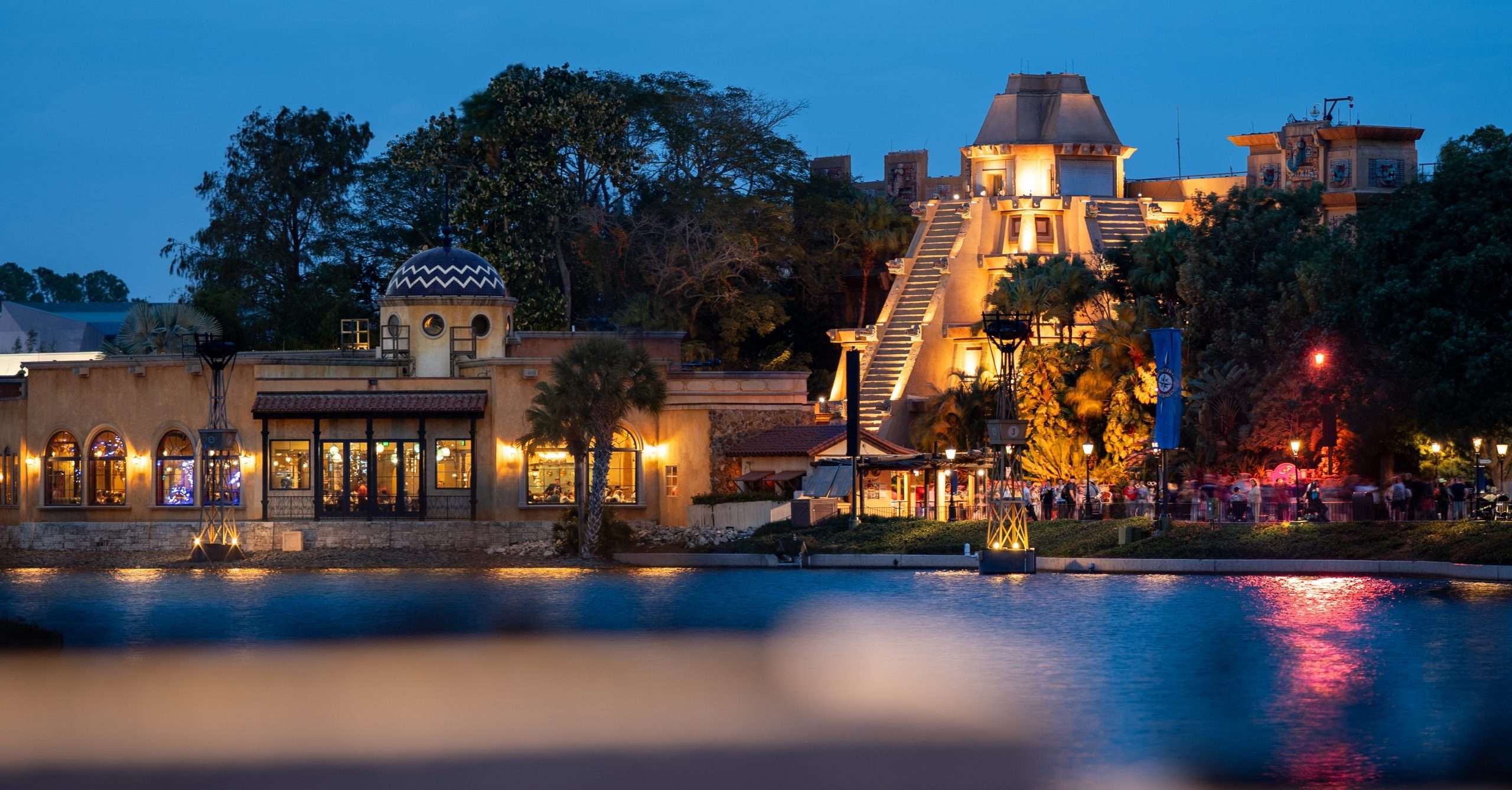
The concern is what happens when the authentic pieces slowly disappear.
A handmade Oaxacan carving disappears. A specialty shop closes. A cultural exhibit doesn’t return. A performer moves on. A restaurant closes and the space eventually becomes something more generic.
None of those changes, by itself, is enough to fundamentally change a pavilion. But that’s not really how change works at EPCOT. It’s the accumulation of the small things that longtime guests notice. The Oaxacan wood-carving shop is one of those small things.
And now, after decades inside the Mexico pavilion, it has become something longtime EPCOT guests remember rather than something today’s guests can experience.


That’s what makes this closure feel bigger than the footprint of the shop itself.
Because World Showcase was never supposed to be just a collection of buildings decorated to look like different countries. The little details were part of the point. The food, the music, the architecture, the shops, the products, the performers, and even the people working inside the pavilions all helped create the feeling that you had stepped somewhere else.
The wood carvings were one small piece of that puzzle. And now one more piece is gone.
Japan: When the Candy Lady Disappeared
The loss of authenticity at EPCOT isn’t always about a store closing.
Sometimes, it’s a person.
If you visited EPCOT regularly years ago, you may remember the Candy Lady in the Japan pavilion. Her name was Miyuki, and watching her work was one of those little experiences that wasn’t necessarily on anyone’s must-do list. But once you discovered her, you made a point of stopping.
I know I did. I loved watching her every trip.
Miyuki was an artist specializing in amezaiku, a traditional Japanese form of candy artistry in which hot, pliable candy is quickly molded into intricate shapes before it hardens. She learned the craft in Japan and brought that skill to EPCOT, where she performed from 1996 until 2013.

There was something mesmerizing about watching her work. She would start with what looked like a simple ball of candy, take a request from someone in the audience, and then begin stretching, shaping, and coloring it. Within minutes, she could turn that ball of candy into an animal or another detailed figure. The guest who made the request would get to take the finished creation home.
I was lucky enough to be that person once.
I was chosen to make a request, and I asked her to make a pink dragon.
I can still remember how special that felt. I wasn’t buying a souvenir. I wasn’t standing in line for a character. I wasn’t watching a scheduled stage show with hundreds of other people. I was simply standing in the Japan pavilion watching an artist practice a traditional Japanese craft—and for a few minutes, I was part of the experience.
That’s the kind of thing that made EPCOT feel different.
Miyuki’s show wasn’t simply entertainment that happened to take place in the Japan pavilion. The craft itself was Japanese. The artist was demonstrating something with a cultural history that extended far beyond Disney World. The experience gave guests a glimpse into something they might never have encountered otherwise.
And then, one day, she was gone.


Miyuki’s final EPCOT performance was on November 23, 2013. There wasn’t a major attraction closure announcement. There wasn’t a giant farewell ceremony that every guest would remember. The Candy Lady simply became one of those things that longtime EPCOT guests remember.
And that’s exactly why I think her absence belongs in this conversation.
Because when we talk about EPCOT losing authenticity, it’s easy to focus on the big, obvious changes. We remember when an attraction is replaced or when a restaurant closes. But sometimes what makes a pavilion feel authentic is much smaller.
It’s an artist working at a little table. It’s a shop selling something you can’t find anywhere else. It’s a performer sharing music from their home country. It’s someone demonstrating a craft that has been passed down through generations.
Those things don’t necessarily draw huge crowds. They don’t require a Lightning Lane. They don’t appear on every Disney vacation checklist. But they give a pavilion a sense of identity.
I don’t remember how many times I walked past the Candy Lady during my Disney trips. I don’t remember every animal she made for other guests.
But I remember watching her. And I remember the day she chose me, and I asked for a pink dragon.
That tiny moment is exactly what I mean when I say that EPCOT’s authenticity can disappear one small piece at a time.
Morocco: When the Marketplace Stops Feeling Like a Marketplace
The Mexico pavilion isn’t the only place where the authentic details of World Showcase have slowly started to disappear. Morocco may be one of the clearest examples.
For years, wandering through the Morocco pavilion meant wandering through an actual marketplace. The pavilion’s collection of shops wasn’t simply a place to buy souvenirs; it was part of what made the space feel different from the rest of EPCOT. There were Moroccan rugs, textiles, jewelry, clothing, leather goods, lanterns, ceramics, and other items that felt connected to the country the pavilion was representing.
That experience has changed dramatically.

Several of the pavilion’s former shops—including the marketplace in the Medina, Tangier Traders, Brass Bazaar, and Casablanca Carpets—are no longer operating. Today, Souk-Al-Magreb is the primary remaining shop, and even that space now includes Disney merchandise alongside the Moroccan goods.
And some of that Disney merchandise is from Aladdin. There’s something particularly ironic about that.
The Morocco pavilion was created to give guests a glimpse into Morocco. The architecture, tilework, fountains, courtyards, colors, and marketplace were all designed to create that feeling of being somewhere else.
And now, within that Moroccan marketplace, you’re increasingly likely to find merchandise based on a fictional Disney kingdom: Agrabah.
To be clear, I’m not saying Aladdin doesn’t have a place at Disney World. It absolutely does. And Disney has always incorporated its own stories into World Showcase. But there’s a difference between a Disney story being represented within a pavilion and that story beginning to take the place of the real-world culture the pavilion was originally designed to showcase.
That’s the distinction that bothers me.


I don’t miss the old Morocco pavilion because I want EPCOT frozen in time. I miss it because the things that used to fill those spaces gave me a reason to wander through them. You could walk into a shop and discover something you had never seen before. You might find a piece of jewelry, a woven bag, a piece of pottery, or a decorative item that felt like it came from somewhere beyond Disney World.
The shopping itself became part of the cultural experience.
Today, the architecture is still there. The intricate tilework is still there. The fountains are still there. The beautiful courtyards are still there. But some of the reasons to stop and explore those spaces have quietly disappeared.
And that’s what makes Morocco such an important example for this conversation. Disney didn’t tear down the pavilion. It didn’t replace the architecture. It didn’t put up a construction wall and announce that Morocco was becoming something else.
The change happened much more quietly. A shop closed. Another didn’t reopen. The merchandise selection changed. Disney-branded products became more prominent. And eventually, you can walk through a space that looks almost exactly as you remember it and realize that the experience isn’t quite the same.
That’s the kind of change I’m talking about when I say EPCOT’s authenticity is slowly disappearing.
It doesn’t happen all at once. It happens one shop at a time.
America: When Heritage Gave Way to Disney Art
The same thing happened in the American Adventure pavilion.
Heritage Manor Gifts opened with EPCOT in 1982 and went through several changes over the years. Originally, it sold historical books, presidential memorabilia, and folk crafts. In 2014, its focus shifted somewhat toward products that were “made in the USA.” The shop closed for good in October 2019 as part of EPCOT’s massive park-wide transformation.
The space reopened a few months later, in December 2019, but this time as the Art of Disney store.
On paper, that might not sound like a particularly significant change. Disney still has a shop there. Guests can still buy something and take a souvenir home. But Heritage Manor wasn’t simply a Disney gift shop with an American flag on the front.
It was part of the story of the pavilion.

The merchandise had an Americana focus, and over the years the shop became known for nostalgic American gifts and products that fit the identity of the American Adventure. The shop itself felt like an extension of the pavilion rather than another location to buy Disney merchandise.
Then it became Art of Disney. And this is where I think the distinction becomes important.
Art of Disney is a perfectly nice store. It features Disney artwork, prints, figurines, collectibles, and pieces created by Disney artists. The location even includes displays about Disney’s artistic history and Walt Disney himself.
But it isn’t specifically American. You could put an Art of Disney store in almost any park.
The American Adventure pavilion is supposed to represent the history, culture, art, and ideals of the United States. Even Disney’s own description of the pavilion emphasizes that it is meant to tell America’s story through its history, music, art, and culture.
So when the pavilion’s dedicated shop becomes a store selling Disney artwork, something subtle changes. The building still looks the same. The American Adventure show is still there. The Voices of Liberty are still there. The architecture is still impressive. But one of the places where the pavilion once extended its American identity into the shopping experience is gone.
And that’s the pattern I’m beginning to notice.


It’s not that Disney stopped giving guests an American experience. It’s that one more opportunity to make the experience specific to the pavilion was replaced with something that could exist almost anywhere.
If I walk into the Mexico pavilion and see handmade Oaxacan wood carvings, I’m seeing something that connects directly to Mexico. If I walk through the Japan pavilion and discover Japanese goods at Mitsukoshi, I’m experiencing something that feels connected to Japan. If I walk through the American Adventure and find an Art of Disney store, I’m experiencing something that is unmistakably Disney.
And Disney is, of course, a part of America. But that’s not really the point.
The World Showcase pavilions were never supposed to be simply different places to sell Disney merchandise. They were supposed to give each country its own identity.
Heritage Manor was a small part of that identity. Its replacement didn’t destroy the American Adventure pavilion. It didn’t even necessarily make the pavilion worse. But it removed one more little piece that made the pavilion feel like its own place.
And that’s the kind of change that can be easy to miss.
You walk into the shop. You see beautiful artwork. You buy it. And you keep walking. It’s only when you stop and think about what used to be there that you realize the shop isn’t really telling you anything about America anymore.
It’s telling you about Disney.
It’s the Little Things
None of these changes, by themselves, are enough to ruin EPCOT.
A small shop closes. A performer moves on. A restaurant doesn’t reopen. A cultural exhibit disappears. A store’s merchandise slowly changes. None of those things make the headlines for very long. For most guests, they may not even notice.
And that’s what makes them so interesting.
EPCOT’s World Showcase was never about one attraction or one experience. Its appeal came from the accumulation of details. The architecture, the music, the food, the merchandise, the entertainment, the people, and the little discoveries tucked into each pavilion all worked together to make each country feel like its own place.

The Oaxacan wood carvings were one of those details. So was watching the Candy Lady turn a piece of hot candy into a pink dragon. So was wandering through the shops of Morocco and finding something that felt like it actually came from Morocco. So was walking into Heritage Manor and finding something that felt connected to America rather than simply another piece of Disney merchandise.
None of those experiences were an E-ticket attraction. None required a Lightning Lane. None were something you needed to experience before leaving EPCOT.
But they were part of what made World Showcase worth wandering through.
And I think that’s what concerns me when I look at the changes happening around the park. It’s not that I want EPCOT frozen in the past. I don’t. Change is inevitable. Some changes are necessary. Some can even make a pavilion better. Disney can refresh a space, introduce new food, update an attraction, or add new experiences without losing what makes the pavilion special.
The question is what happens when the things being removed are consistently the things that make each pavilion specific. Individually, these are small changes. Together, they begin to tell a different story.
And maybe that’s why longtime EPCOT guests sometimes walk through World Showcase and feel like something is missing without being able to immediately explain what it is.
It’s not necessarily the big things.
It’s the little things.
The things you weren’t expecting to find. The things that taught you something, surprised you, made you stop and watch for a few minutes, or gave you a souvenir that felt like it came from somewhere beyond the Disney bubble.
That’s what made World Showcase special to me.
I don’t want Disney to stop changing EPCOT. I just hope that as it continues to evolve, it remembers that authenticity is part of the attraction.
Because once enough of the little things disappear, you don’t have to remove the pavilions themselves to change what World Showcase feels like. You just have to remove enough of what made them unique.
And eventually the question isn’t “What did EPCOT change?”
It’s “What did EPCOT quietly lose?”
Discover more from Guide4WDW.com
Subscribe to get the latest posts sent to your email.