I opened a junk drawer the other day looking for a battery.
You probably have one of these drawers. It contains three pens that may or may not work, a key nobody recognizes, instructions for something you no longer own, approximately fourteen charging cables that fit nothing currently manufactured, and one perfectly good pair of scissors that disappears whenever you actually need scissors.
Mine didn’t have the battery.
What it did have was a handful of things I’d completely forgotten about. Nothing particularly valuable. Just little leftovers from another time—things that had once been important enough to keep but apparently not important enough to remember. I spent ten minutes looking through them. I never found the battery. This is how adulthood works. But it got me thinking about how many things we don’t actually get rid of. We just put them somewhere.
Ideas work that way too. And if there’s one company that must have an extraordinary metaphorical junk drawer, it’s Disney.
Imagine being the person responsible for cleaning out an old Imagineering office. Somewhere between the blueprints for Space Mountain and a box labeled “DO NOT THROW AWAY” you’d probably find plans for a restaurant that was never built, three versions of an attraction that eventually became something else, and an entire hotel someone spent five years designing before Disney collectively decided, “Maybe later.”
Walt Disney World has quite a few of those.
Some of them are fascinating because they weren’t merely ideas. Disney planned them seriously. Land was prepared. Roads were built. In one particularly strange case, Disney actually started constructing the buildings—and then essentially left them sitting beside a lake.
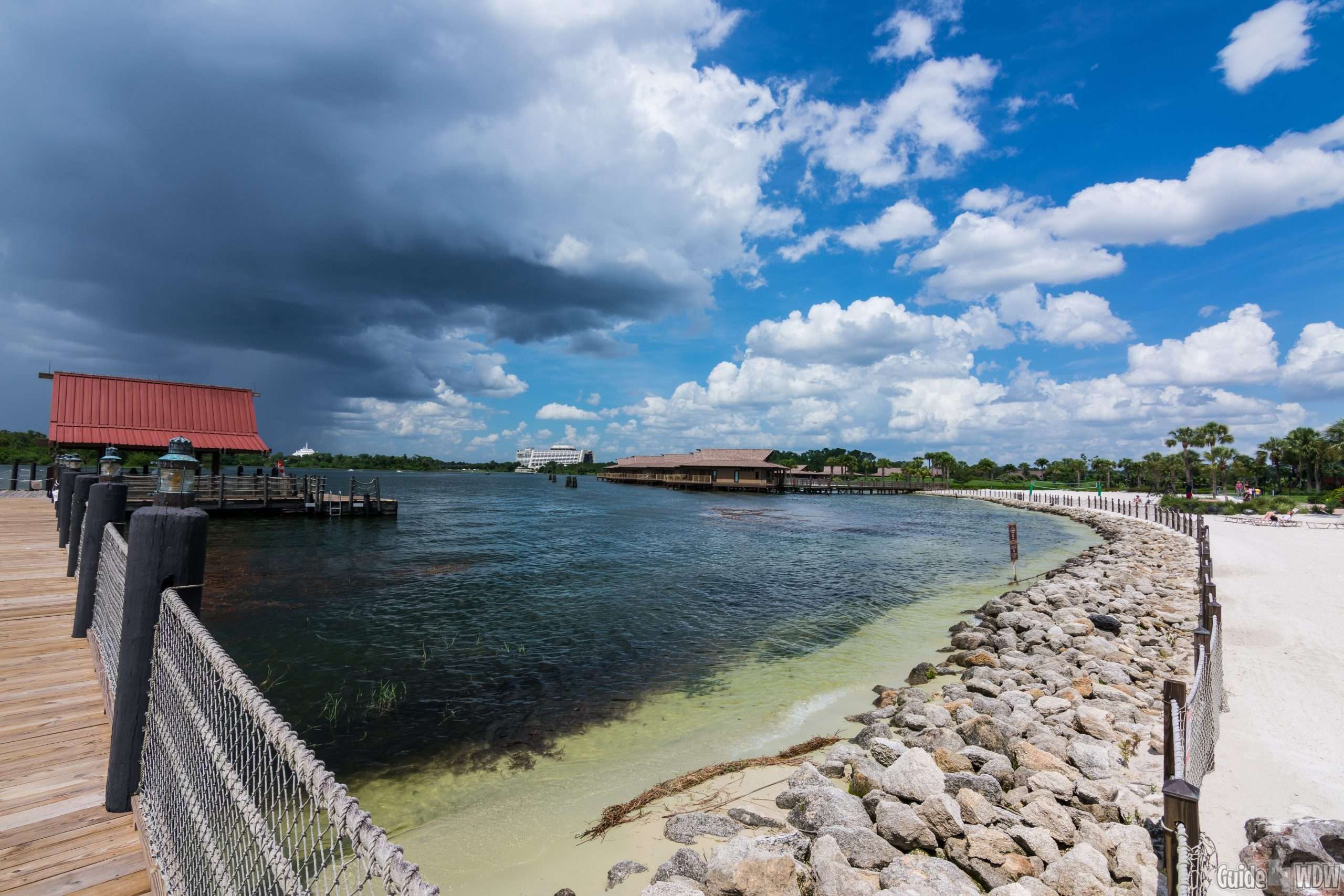
It’s easy to forget that when we visit Walt Disney World today.
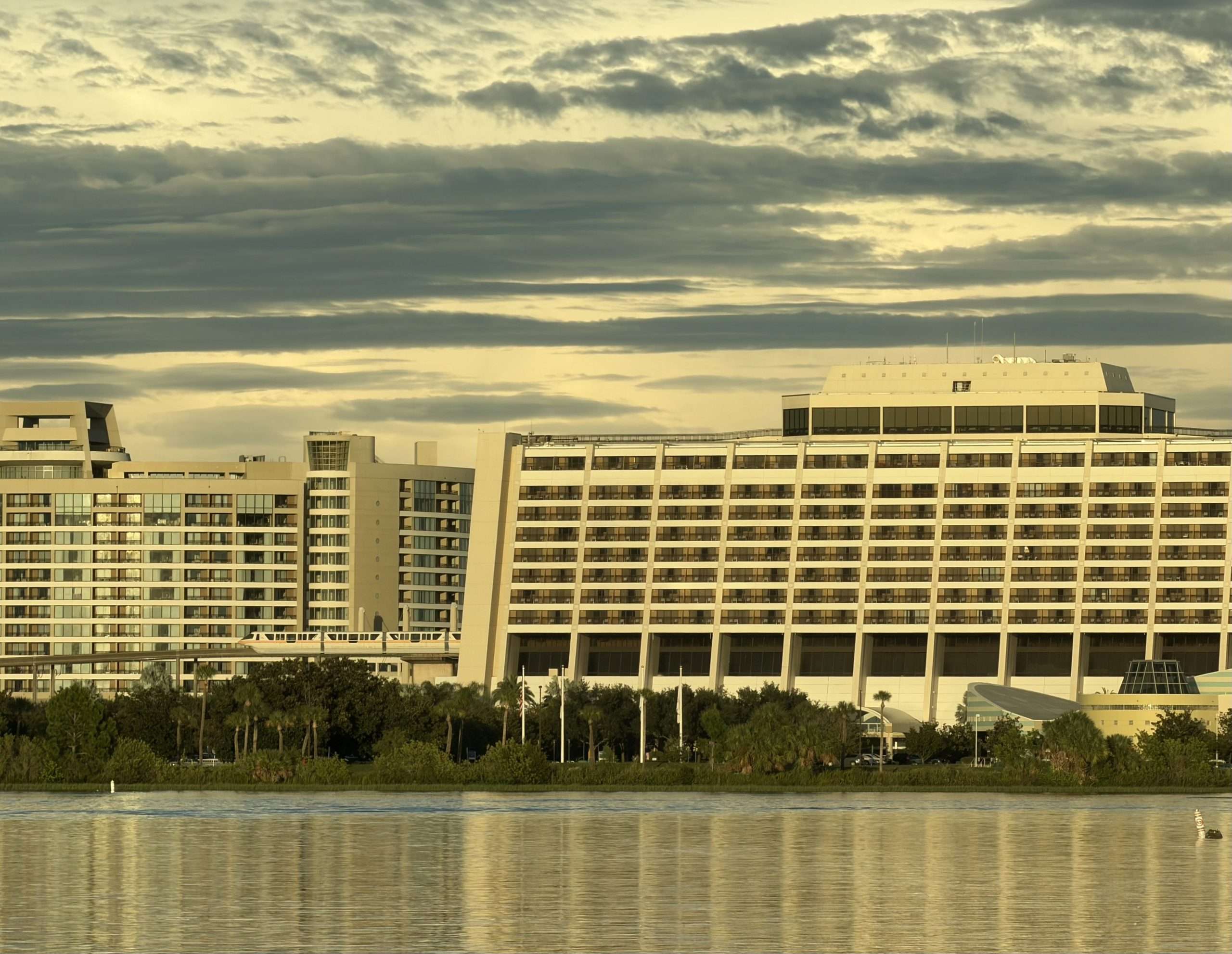
We see the Grand Floridian sitting along Seven Seas Lagoon and assume that’s simply where the Grand Floridian belongs. The Contemporary has been beside the Magic Kingdom for so long that imagining the skyline without it feels strange. Pop Century and Art of Animation sit across Hourglass Lake from one another as though someone drew them that way from the beginning.
But that’s not what happened. There was another Walt Disney World once. Not one that actually existed, but one that came surprisingly close.
In that version, an enormous Persian palace sat along Bay Lake. A Thai-inspired resort occupied the land where the Grand Floridian stands today. Gondolas floated through Venetian canals near the Contemporary. And across Hourglass Lake from Pop Century stood another massive resort celebrating the first half of the 20th century.
Some of these weren’t sketches someone made during a particularly optimistic lunch meeting. Disney created detailed plans and concept art. Land was prepared. Access roads appeared. Construction started. Then life happened. The economy changed. Tourism slowed. Construction proved more difficult than anticipated. September 11th changed travel across the country. Disney needed fewer hotel rooms. Priorities shifted.
One by one, these resorts went into the drawer.
That’s part of what I’ve always loved about Walt Disney World history. The history is what made today’s parks and resorts places that have created memories for your family as well as mine for generations. But when you start digging into it, you realize the Disney World we know wasn’t inevitable.
It’s simply the version that made it out of the drawer. And there are some pretty incredible things still sitting inside.
Disney’s Persian Resort
In the early days of Walt Disney World, Disney planned several hotels to follow relatively quickly after the debut of the Magic Kingdom. The Contemporary and Polynesian opened alongside the park in 1971, but Disney’s original ambitions for the resort area extended well beyond those two properties. One of the grandest proposals was Disney’s Persian Resort.
The Persian Resort was planned for the east side of the Magic Kingdom along Bay Lake. Renderings depicted an elaborate complex centered around an enormous domed structure, with architecture and landscaping intended to create the feeling of a grand Persian palace. It would have featured hundreds of guest rooms along with restaurants, shopping, recreation, entertainment, and large common areas designed to make the resort itself part of the attraction.
That’s something I think we occasionally forget about early Walt Disney World. Disney wasn’t simply building hotels near theme parks. The hotels were part of the show. You weren’t supposed to leave the Magic Kingdom, walk into your resort, and suddenly feel as though you’d arrived at a perfectly nice airport Marriott. You were still somewhere else.
The Persian Resort would have taken that idea rather seriously.
Perhaps the most fascinating part of the concept involved transportation. Some versions of the plans considered extending monorail service toward the resort, potentially creating a connection near Tomorrowland and dramatically altering the transportation network around the Magic Kingdom.

Think about that for a moment. You could have left Tomorrowland, climbed aboard a monorail, and headed toward an enormous Persian palace sitting on Bay Lake. That’s the sort of sentence that sounds like something a Disney fan invents after staring at old maps for too long, but it was genuinely part of the thinking surrounding Walt Disney World’s early development.
Then 1973 arrived.
The oil crisis and economic uncertainty that followed had a major effect on travel and tourism. Suddenly, Disney didn’t need thousands of additional hotel rooms quite as urgently as it had anticipated. Expansion slowed, priorities changed, and those incredibly ambitious resort plans became much harder to justify. No matter how elaborate the drawings had become, the Persian Resort faded away.
More than five decades later, that portion of the Magic Kingdom resort area remains relatively undeveloped compared with much of the shoreline around Seven Seas Lagoon and Bay Lake. Walt Disney World has changed enormously since the Persian Resort was proposed, so Disney suddenly pulling a rolled-up blueprint out of a filing cabinet and saying, “You know what? Let’s finally build this thing,” probably isn’t something I’d plan a vacation around.
Still, it’s fun to imagine.
Disney World has always been exceptionally good at creating places that don’t really exist. The Persian Resort just happens to be one they never got around to creating.
Disney’s Asian Resort
Just like the Persian Resort, Disney had grand plans for an Asian-inspired resort. The difference is that this one came remarkably close to becoming part of the Walt Disney World landscape.
Disney went as far as preparing land for the development during the creation of Seven Seas Lagoon. The proposed resort would have occupied a distinctive piece of land extending into the lagoon, with architecture heavily influenced by Thailand. It was designed to be dramatic from the water and equally immersive once guests stepped inside.
Again, this wasn’t supposed to be a hotel where Disney hung a few pieces of themed artwork in the lobby and called it a day. The architecture, landscaping, restaurants, entertainment, and overall experience would have worked together to transport guests somewhere else.

The hotel wasn’t where you went when you were finished with Disney for the day. The hotel was still an operating and continuing experience that extend the magic. Disney was serious enough about the Asian Resort that an access road toward the proposed development was given the wonderfully creative name Asian Way.
Apparently everyone was tired by the time they got to naming the road.
And if you’ve spent much time around Walt Disney World, you probably know there’s no Asian Resort sitting along Seven Seas Lagoon today. But you may have stayed in the hotel that eventually took its place.
The Asian Resort was planned for the land where the Grand Floridian stands today. Once again, the economic realities of the 1970s changed Disney’s immediate needs. Tourism slowed, the anticipated demand for new hotel rooms wasn’t there, and the Asian Resort disappeared from Disney’s plans. For years, the site remained largely undeveloped.
Then Disney came back.
In 1988, Disney’s Grand Floridian Resort & Spa opened on the shoreline, bringing an entirely different Victorian-inspired vision to the location. Asian Way eventually became Floridian Way, which probably saved Disney Cast Members from giving a lengthy history lesson every time someone asked for directions.
I’ve always loved that little piece of the story.
Thousands of us have driven down Floridian Way without giving its name a second thought. But once upon a time, that road was literally pointing toward a Disney resort that never existed. The next time you walk through the Grand Floridian lobby or see the resort across Seven Seas Lagoon, it’s worth remembering that none of it was guaranteed. There was another idea there first.
Disney’s Venetian Resort
The Venetian Resort has an especially interesting history because Disney essentially forgot about it twice.
That just goes to show that a good idea never completely disappears. Sometimes it gets put back in the drawer until someone finds it twenty years later and says, “Has anybody thought about this?”
The original Venetian Resort was planned for an area of land between the Contemporary and what we now know as the Transportation and Ticket Center. The concept was grand in scale, with hundreds of rooms, restaurants, shops, elaborate European architecture, and—most memorably—canals with gondolas carrying guests through portions of the resort.
Disney was essentially proposing a little piece of Venice along Seven Seas Lagoon. Because apparently building a hotel on regular dry land had lost its sense of adventure.
Once again, however, the economic downturn of the 1970s caught up with Disney’s expansion plans. Tourism slowed, Disney no longer needed the additional rooms as urgently, and the Venetian Resort disappeared. But it wasn’t entirely forgotten. Years later, during Michael Eisner’s time leading Disney, the idea of developing a major European-inspired luxury resort on the same general stretch of land resurfaced. This time the concept became known as Disney’s Mediterranean Resort.

Disney began seriously exploring the possibilities. Then the ground got involved.
Unfortunately, the soil conditions in the area would have required extensive foundation work to support a resort of the scale Disney envisioned. That made an already ambitious project considerably more complicated and considerably more expensive, which is generally the point where even the most beautiful Imagineering artwork meets someone from accounting.
Once again, the idea went back into the drawer.
So today, when you’re riding the monorail between the Transportation and Ticket Center and the Contemporary, take a look toward that stretch of land. You’re passing an area where Disney spent decades imagining elaborate resorts that never happened. No Venetian canals. No Mediterranean palace. No gondolas.
Just trees, shoreline, and a very expensive hotel that exists only in old Disney concept art! It’s truly odd to think about today as a new DVC resort goes up near Fort Wilderness!
Disney’s Legendary Years Resort
The Legendary Years is different from every other resort on this list because Disney didn’t simply design it. They started building it. And then stopped.
Many of us know Pop Century as one of Walt Disney World’s Value Resorts, sitting across Hourglass Lake from Art of Animation. But the original Pop Century concept was considerably larger than what eventually opened. The side we know today was the Classic Years, celebrating the 1950s through the 1990s. Across Hourglass Lake, Disney planned the Legendary Years, celebrating the earlier decades of the 20th century. Together, the two sides would create an enormous resort celebrating an entire century of American pop culture.
Construction began. Buildings started rising. Then September 11, 2001 changed the travel industry almost overnight. The attacks had a profound effect on tourism throughout the United States. Travel declined, uncertainty grew, and Disney suddenly faced a very different environment than the one in which the resort had originally been planned.

The Classic Years portion of Pop Century eventually opened in 2003. Across Hourglass Lake, however, the Legendary Years remained unfinished. And when I say unfinished, I don’t mean Disney forgot a few lamps. There were abandoned hotel buildings sitting there.
For years, guests at Pop Century could look across the lake and see the shells of an unfinished Disney resort. I’ve always found that wonderfully strange. This is a company famous for putting a themed construction wall around almost anything it doesn’t want guests to see, yet across the water sat several entire buildings essentially saying, “We’ll circle back.”
Even the bridge connecting the two halves had been constructed. It simply led toward a resort that wasn’t there. Thankfully, the story didn’t end there.
Disney eventually turned the abandoned development into something entirely different. In 2010, Disney announced Art of Animation Resort, which began opening in 2012. Instead of celebrating the early decades of the 20th century, the new resort would celebrate Finding Nemo, Cars, The Lion King, and The Little Mermaid. Parts of the original Legendary Years development were incorporated into the new resort, particularly what ultimately became the Little Mermaid section. So you may not remember the Legendary Years. But you may have stayed in part of it!
And there’s one more piece of the story that seems almost too perfect.
The bridge originally intended to connect Pop Century’s Classic and Legendary Years now connects Pop Century and Art of Animation. Today, the Disney Skyliner station sits in the middle of Hourglass Lake. A bridge built for a resort that never opened ultimately became useful for something Disney hadn’t even imagined when it built it.
Maybe that’s the best part of this entire story. Disney didn’t throw everything away.
Sometimes they just found another use for it.
The Walt Disney World That Almost Was
I never did find the battery.
I eventually bought another pack, which almost guarantees there are twelve perfectly good batteries somewhere in my house waiting to be discovered six months from now.
But I’ve thought about that drawer a few times since. We tend to think forgotten things weren’t important. Sometimes they simply weren’t right for the moment. That’s essentially the story of these resorts.
The Asian Resort disappeared, but decades later the Grand Floridian rose from the same shoreline. The Legendary Years stalled, but its unfinished buildings eventually became part of Art of Animation. A bridge built to connect two halves of Pop Century ultimately became part of the path thousands of guests take toward the Disney Skyliner.
Other ideas simply stayed in the drawer.
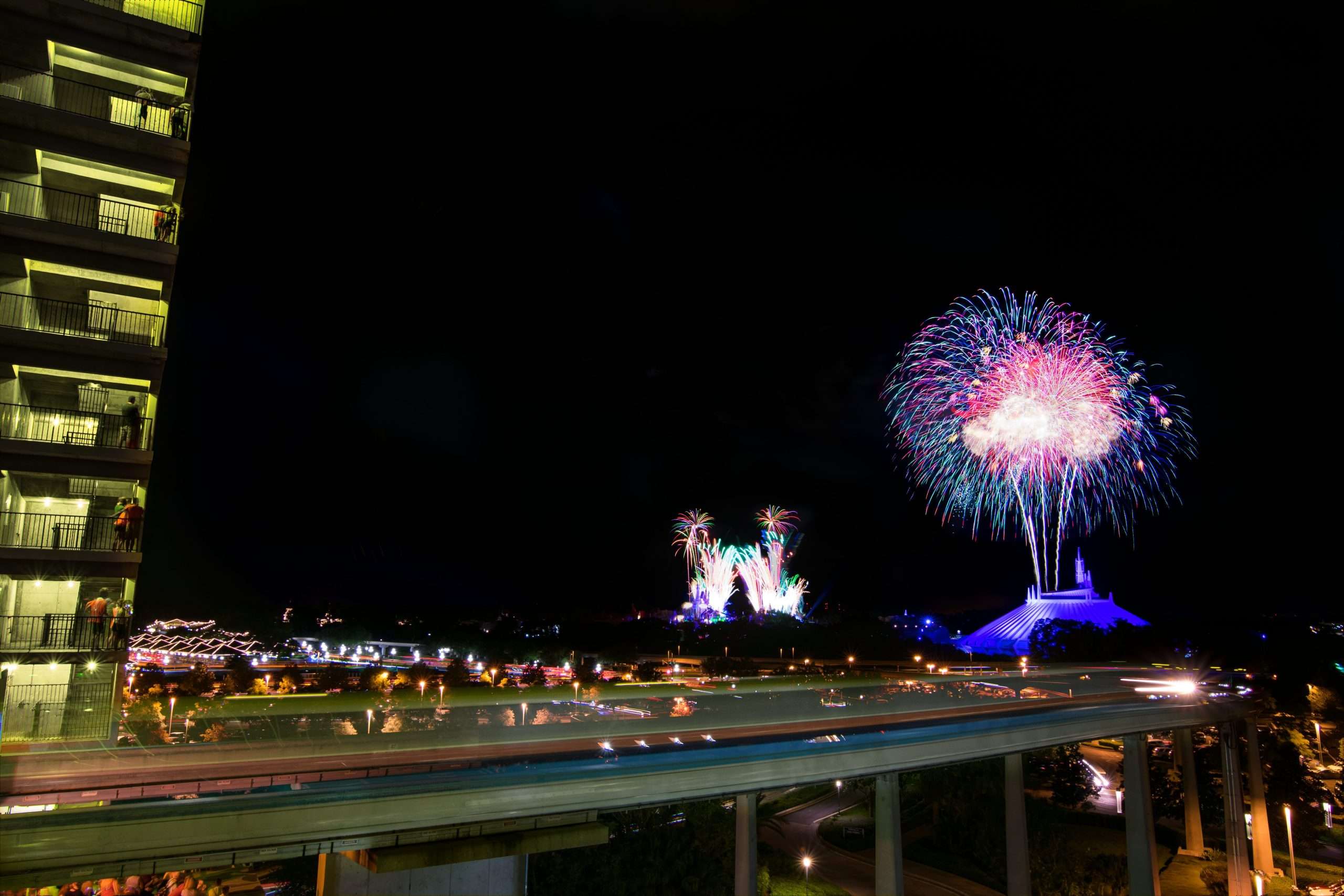
And that’s one of the reasons I still enjoy digging through Walt Disney World history all these years later. The history is what made today’s parks a place that has created memories for your family as well as mine for generations. But it also reminds us that the Walt Disney World we know wasn’t inevitable.
It’s simply the version that made it out of the drawer. The version we got to experience.
We spend a lot of time as Disney fans talking about change. Something closes and we miss it. Something new gets announced and we wonder whether we’ll love it as much as what came before. We photograph the same places over and over because somewhere in the back of our minds we know they won’t look exactly this way forever.
But Disney has always worked this way.
Ideas get built. Ideas get abandoned. Sometimes they sit around long enough for someone to discover that they’re useful again.
Maybe there’s something reassuring about that. Not everything that doesn’t work out was a waste. Sometimes you built a bridge for the wrong resort. Then, twenty years later, everybody needs the bridge.
The parks will change. The resorts will change. But the stories have a funny way of sticking around.
And somewhere deep inside an Imagineering archive, I’d like to think there’s still a drawing of an enormous Persian palace on Bay Lake waiting for somebody to open the right drawer.
Hopefully the batteries are in there too.
There’s Always More to The Story! – How About Ours!
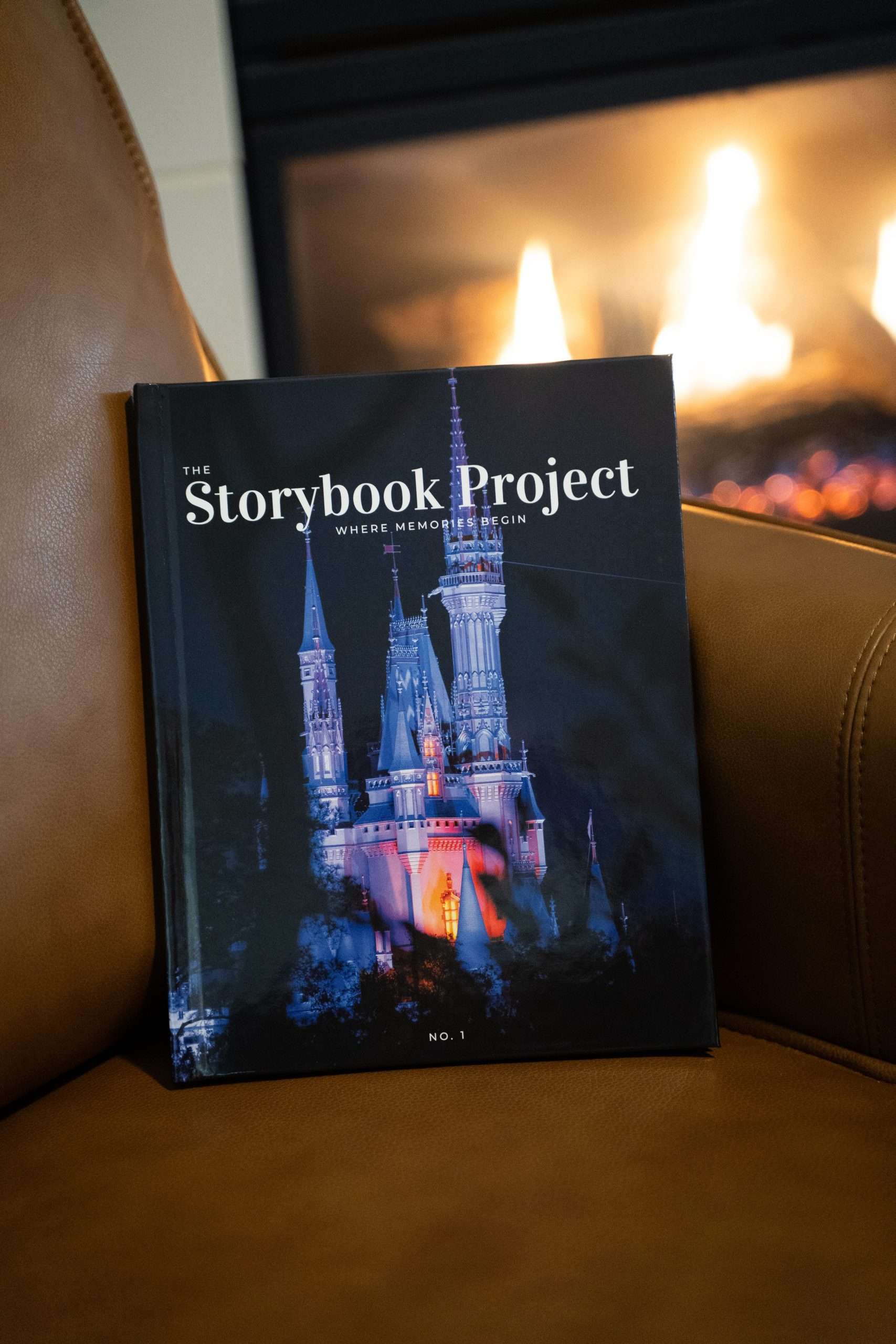
Some Disney stories are worth holding onto. That idea is a big part of why I created The Storybook Project—a physical book built around the places, details, photographs, and memories that make Walt Disney World mean something long after the vacation is over. It’s available now in hardcover and paperback, made for those of us who still like having something real on the shelf or coffee table to pick up and revisit from time to time. The parks will change—they always have—but the stories we bring home have a way of sticking around. Take a look inside The Storybook Project and order your copy here.

Discover more from Guide4WDW.com
Subscribe to get the latest posts sent to your email.